Plate Load Testing Services in Chennai | Ensure Site Safety
Reliable foundation engineering starts with accurate ground verification. Our Plate Load Testing services in Chennai help builders, structural engineers, and infrastructure developers evaluate real soil behavior before construction begins. Across diverse urban and coastal subsoils, direct field load data prevents costly settlement failures, structural distress, and overdesigned footings across residential, commercial, and industrial sites.
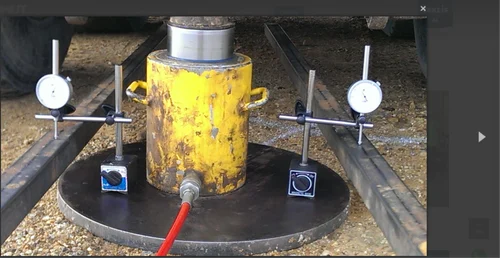
What Is a Plate Load Test and How Does It Work?
A plate load test is an in-situ geotechnical field procedure used to determine the ultimate bearing capacity of soil and its expected settlement under applied loads. Engineers place a rigid steel bearing plate at the proposed foundation level, apply incremental loads through a hydraulic jack against a reaction system, and record vertical displacement using precision dial gauges. The resulting load-settlement curve supports shallow foundation design.
How Plate Load Testing Services in Chennai Support Your Project
Commissioning a Plate Load Test in Chennai gives project teams direct insight into how local strata respond before pouring structural concrete. Rather than relying solely on assumptions, our Plate Load Testing services in Chennai validate safe bearing pressure, subgrade modulus, and deformation behavior for isolated footings, raft foundations, industrial floor slabs, and machine bases under realistic site conditions.
Top Benefits of Plate Load Testing Services
- Direct Soil Data: Measures actual load-settlement response right at foundation depth.
- Cost Optimization: Helps refine footing dimensions without excessive material waste.
- Settlement Control: Identifies early displacement trends to protect superstructures.
- Design Confidence: Supports structural calculations with verifiable field measurements.
- Versatile Application: Suits buildings, pavements, warehouses, and heavy equipment pads.
Why Engineers Trust Our Plate Load Testing Services in Chennai
- Proven Heritage: Backed by over forty years of civil testing experience at TMTL Civil.
- Code Compliance: Conducted following relevant Indian Standard field testing practices.
- Calibrated Equipment: Uses properly maintained loading setups and displacement instruments.
- Skilled Engineers: Executed by trained technical personnel focused on safety and precision.
- Timely Reporting: Delivers clear, structured test records on schedule.
Conclusion
Sound ground verification protects structural durability, project schedules, and long-term capital investment. Whether planning a compact residential structure, commercial facility, or industrial slab, dependable field testing provides the factual clarity engineers need before construction advances. Reach out to TMTL Civil to schedule accurate on-site geotechnical testing tailored to your project requirements and site conditions across your upcoming build with complete confidence and engineering precision.
Frequently Asked Questions
What does a plate load test determine?
It determines soil bearing capacity, load-settlement behavior, and subgrade reaction at foundation level to support safe, practical shallow footing design under working loads.
When should a plate load test be conducted?
Conduct it after excavating to foundation depth and before footing construction, especially when verifying subgrade stiffness or soil improvement.
Does plate load testing replace borehole investigations?
No, it complements borehole logs and laboratory tests by verifying shallow load response directly on site rather than mapping deep strata.
What affects plate load test results?
Soil type, moisture content, groundwater conditions, test pit preparation, plate size, and reaction stability all influence measured load and settlement readings.